

Table of Contents
- Why Outdoor Planter Arrangements Fail (And How to Fix It)
- What You'll Need Before You Start Arranging
- What You'll Need
- Step-by-Step: How to Arrange Flowers in Outdoor Planters
- DIY Outdoor Planter Arrangement Ideas for Porches and Entryways
- How to Secure Artificial Flowers in Pots So Wind Can't Move Them
- UV-Resistant Artificial Flowers for Outdoors: What to Look For
- Common Mistakes to Avoid with Outdoor Planter Arrangements
- Conclusion
- Frequently Asked Questions
Last Updated: October 4, 2026
Why Outdoor Planter Arrangements Fail (And How to Fix It)
Most flower arrangements for outdoor planters fail for one boring reason: water has nowhere to go. Soggy roots rot. Dry roots crisp. Either way, the arrangement looks tired within weeks.
The fix is not more skill. It is better prep before a single stem goes in.
A few facts shape everything below:
- Wind, sun, and rain hit containers harder than any indoor spot
- Most failures trace back to drainage, not plant choice
- Artificial stems need anchoring, not just arranging
Below, we will show you exactly how to build an arrangement that holds up.
What You'll Need Before You Start Arranging
Gather your tools before you touch a single bloom. A short supply list keeps you from improvising halfway through.
Total Time: 45 to 60 minutes Difficulty: Beginner
What You'll Need
- A container with at least one drainage hole
- Potting soil mixed with perlite for moisture control
- A drainage tray or saucer
- Greenery stems, focal blooms, and filler
- Floral foam or a wire grid for artificial stems
- Garden snips and a small trowel
- Gloves
Choosing Your Container and Drainage Setup
Pick a container that fits your space and drains well. Size matters more than style here.
A pot that is too small dries out fast. One that is too large holds water and gets heavy. Aim for a container about two-thirds the height of your finished arrangement.
Good options include:
- Terra cotta pots with a single bottom hole
- Galvanized metal planters with drilled drainage
- Ornate urns with a removable inner pot
- Hanging baskets lined with coir
- Window boxes with a sloped base
Check the hole before you buy. If it is missing, drill one. A drainage tray underneath catches runoff and protects your porch surface.

Step-by-Step: How to Arrange Flowers in Outdoor Planters
Here is the full process, start to finish. Follow the order and you will avoid the two classic mistakes: planting too deep and skipping drainage.
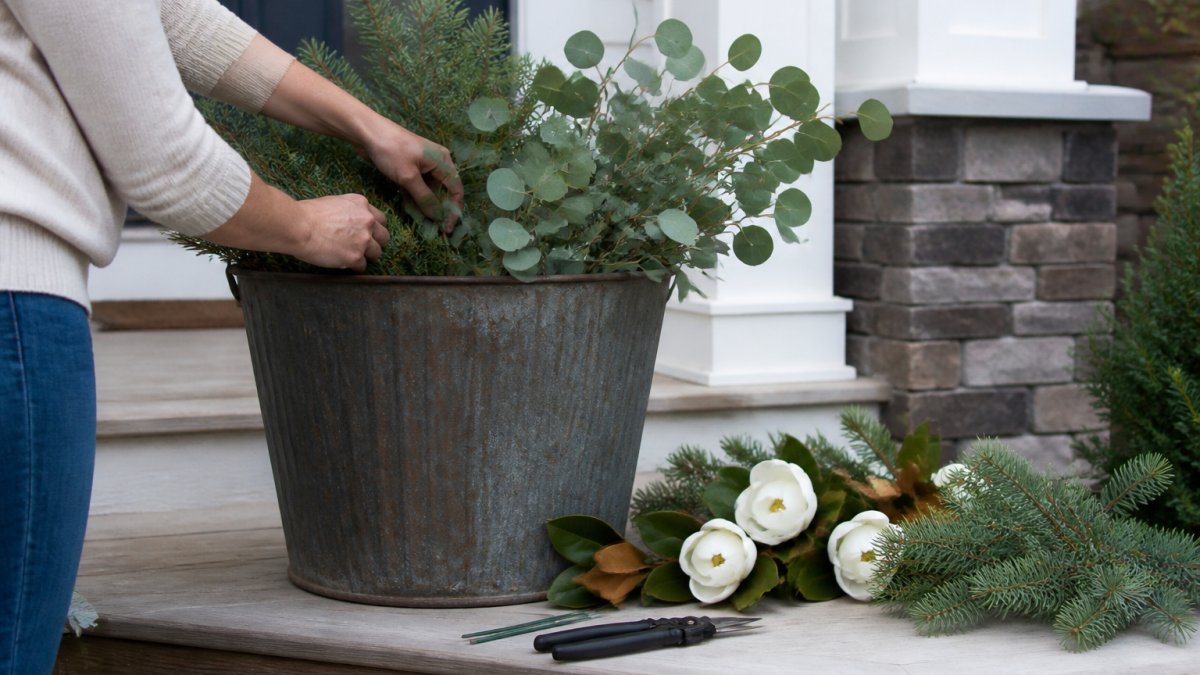
Layering Greenery, Focal Blooms, and Filler
Build in three layers. This is the single biggest upgrade to any arrangement.
Start with greenery as your base. It sets the shape and hides the mechanics underneath. Then add your focal blooms, the eye-catchers that draw attention. Finish with filler to soften the edges.
A simple ratio to remember:
- 60% greenery
- 30% focal blooms
- 10% filler
For greenery, try angel pine, eucalyptus, or cascading ivy. For focal blooms, a large magnolia or hydrangea works well. For filler, berries, seed pods, and small sprigs add texture.
Vary the height. Push tall stems to the back and let trailing pieces spill over the front edge. That contrast is what makes an arrangement read as designed rather than dumped.
Installing Drainage Before You Plant or Place
Drainage comes before anything else goes in the pot. This step takes two minutes and saves your whole arrangement.
Line the bottom with a layer of gravel or small stones. Add potting soil on top, leaving an inch of space below the rim. That gap stops water from overflowing when you water.
For moisture control, mix perlite into your soil. It keeps roots from sitting in wet, heavy dirt.
If you are using artificial stems, you still need drainage. Water pools in any outdoor container, and faux stems sitting in standing water will stain and degrade.
DIY Outdoor Planter Arrangement Ideas for Porches and Entryways
Your front door sets the tone for the whole house. A well-built planter makes that first impression count. The ideas below go past the usual "two matching pots" advice.
Try these DIY garden projects for porch decor:
- Symmetrical pair: Two matching planters flanking the door, same height and color story
- Seasonal swap: One statement container you restyle each season
- Repurposed containers: An old bucket, crate, or wheelbarrow as a planter
- Herb garden: Rosemary, thyme, and sage in a sunlit window box
- Wall-mounted: A space-saving vertical planter for narrow entryways
For a rustic charm look, lean on galvanized metal, aged wood, and natural textures. For an organic modern feel, use clean lines, muted greens, and one bold bloom.
Match the Plants to the Light Before You Match the Colors
Most porch planters fail because the plants were chosen for how they look, not for how much sun the spot actually gets. Before you buy a single stem, watch your entryway for one full day and note when it is in direct sun.
Full sun (6 or more hours of direct sun):
- Angelface angelonia, portulaca, lantana, and ornamental grasses
- Succulents such as sedum and hens-and-chicks, which shrug off heat and dry spells
- Trailing sweet potato vine for the spill-over layer
Part sun (3 to 6 hours, ideally morning sun):
- Calibrachoa, bacopa, and nemesia
- Coleus for foliage color that holds without full sun
- Fuchsia for hanging baskets in dappled light
Shade (fewer than 3 hours of direct sun):
Christmas Holiday Planter Red Magnolia Pine Berries Winter Decor →
- Impatiens, begonias, and torenia
- Heuchera and ferns for texture
- English ivy or creeping wire vine as the trailing element
A common pattern is that a north-facing entry gets less light than the homeowner assumes, so shade-tolerant plants outperform sun-lovers there even in summer.
Climate Pairing by Region
The USDA Plant Hardiness Zone Map is the starting point. Find your zone, then choose plants rated for it or one zone colder.
- Hot, dry zones (roughly 8-11): Lantana, portulaca, rosemary, and succulents. These tolerate reflected heat off pavement and need less water.
- Humid zones (roughly 7-9): Angelonia, coleus, and lantana resist mildew better than petunias and geraniums, which struggle in heavy humidity.
- Cold-winter zones (roughly 3-6): Frost-hardy greenery such as ornamental kale, ivy, and dwarf evergreens carry the arrangement into fall. For year-round color without replanting, UV-resistant artificial stems are the practical choice.
One Layout, Three Seasons
A single statement container can carry the whole year if you plan the swap:
- Spring: Bulbs or pansies with trailing ivy
- Summer: Angelonia or calibrachoa with sweet potato vine
- Fall: Ornamental kale, mums, and small pumpkins tucked into the greenery
- Winter: Evergreen sprigs, red-twig dogwood, and berries, real or UV-resistant faux
Keep the same container, the same greenery base, and the same height line. Only the focal blooms change. That consistency is what makes a porch read as designed rather than decorated.
How to Secure Artificial Flowers in Pots So Wind Can't Move Them
Artificial stems need real anchoring. Wind will find every loose piece.
The fix is simple. Push each stem deep into floral foam or a wire grid set just below the soil line. Foam holds the shape. A grid holds heavier stems.
For extra hold:
- Bend the stem base into a hook before inserting
- Wrap wired stems around a central support
- Add a thin layer of gravel on top to lock everything down
- Group stems tightly so they brace each other
Wired stems give you the most control. You can shape them to sit exactly where you want, then lock the wire into the foam.
Weight matters too. A light pot tips in a gust. Choose a heavier container or add stones to the base for stability.
UV-Resistant Artificial Flowers for Outdoors: What to Look For
Not all faux florals survive the sun. UV-resistant artificial flowers for outdoors are built to hold their color through direct light.
Look for these markers:
- Labels that name UV protection or fade resistance
- Silk or polyester blends over cheap plastic
- Color that runs through the material, not just on the surface
- Tightly attached petals and leaves
Cheap plastic flowers fade and crack fast. Quality silk flowers with wired stems keep their shape and color far longer.
For outdoor use, check the material before you buy. Foliage and floral stems rated for outdoor display handle sun and rain far better than indoor-only pieces.
The FTC guidance on environmental marketing claims is a useful reminder to read labels closely. Terms like "UV-resistant" should be specific, not vague.
Caring for faux florals is easy.
Common Mistakes to Avoid with Outdoor Planter Arrangements
Small errors cause most outdoor planter problems. Here are the ones we see most.
- Skipping drainage: The top cause of rot and mold
- Overcrowding stems: Tight roots and stems compete for air and water
- Using indoor-only faux florals outside: They fade and fall apart fast
- Ignoring wind: Light pots and loose stems tip and blow over
- Watering faux arrangements: It stains and degrades the material
- Forgetting seasonal swaps: A summer arrangement looks tired by fall
Fix these and your arrangement lasts far longer. Seasonal planting keeps the look fresh without a full rebuild.
For a low-maintenance option, handcrafted artificial arrangements skip watering and wilting entirely. Eternal Blooms Designs builds one-of-a-kind pieces with premium real-touch florals, designed to hold their beauty through every season. A custom piece can be built to fit your exact entryway, from a rustic holiday planter to a fall tricycle display.

For more on container gardening basics, the Penn State Extension guide to container gardening covers soil, light, and watering in plain terms.
Conclusion
Getting flower arrangements for outdoor planters right comes down to prep: drainage first, layering second, anchoring third. Skip any step and the arrangement shows it.
If you would rather skip the upkeep, Eternal Blooms Designs can help. Every piece is handmade by designer Patti Hale, built from one-of-a-kind arrangements that never need watering or replacing. Custom orders let you match your porch layout, your color story, and your season.
Get started with Eternal Blooms Designs and bring lasting beauty to your outdoor space.
Frequently Asked Questions
How do you keep artificial flower arrangements secure in outdoor planters?
Start with a heavy base: fill the bottom third of your pot with gravel or sand before adding foam or soil. Push each stem deep into the foam, then anchor tall or trailing pieces with floral wire or zip ties looped around a hidden support stick. For windy porches, use a weighted planter liner or museum putty under the container itself. If you're building a flower arrangement for outdoor planters that stays put year-round, check the stability after the first storm and reset any loosened stems.
What are the best artificial flowers for outdoor planters?
Look for UV-resistant labels and real-touch materials like silk or coated fabric rather than thin plastic. UV-resistant artificial flowers for outdoors hold their color through direct sun instead of fading to gray within a season. Choose wired stems so you can bend them into natural curves, and pick pieces with varied textures, such as frosted pine, eucalyptus, and magnolia, so the arrangement reads as real from a few feet away. Rotate arrangements seasonally to extend their usable life.
Can artificial flower arrangements withstand harsh weather conditions?
Quality UV-resistant arrangements handle sun, rain, and wind well, but placement matters. Bring delicate pieces inside before hail or heavy storms, and keep containers where water can drain instead of pooling around the stems. In freezing months, moisture trapped in foam can crack it, so empty and dry the pot or swap in a winter-safe design. A well-built arrangement on a covered porch typically holds up for multiple seasons without replacement.
How do I make my outdoor planter arrangement look realistic?
Work in odd numbers and vary height: one tall centerpiece, mid-height blooms around it, and trailing pieces spilling over the rim. Bend wired stems so no two point the same direction, and mix textures like glossy leaves with matte pine. Tuck in natural touches such as grapevine spheres, pinecones, or ribbon. A handmade, one-of-a-kind arrangement, like the fall tricycle planter with cascading birch leaves, shows how layered greenery and a single focal pumpkin create a convincing, lived-in look.